.svg)

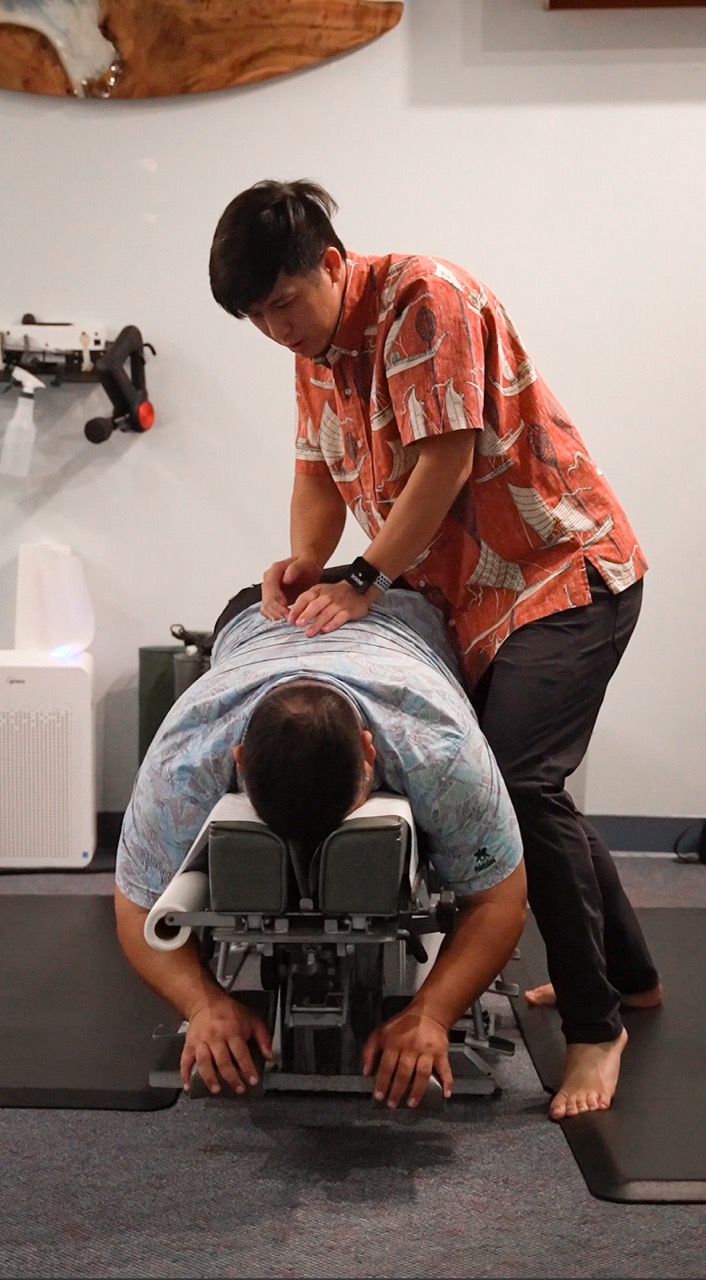
The Injury Rarely Starts With the Injury
Ask a framer, an electrician, or a plumber how they hurt their back and most will name a specific moment. A sheet of plywood. A water heater on a stair landing. A conduit run overhead that went twenty minutes too long. That moment is real, but it is almost never the whole story. It is the last rep in a long series, the one where accumulated fatigue and a slightly worse position met a load the tissue had been tolerating for years.
That distinction matters because it changes what prevention looks like. You cannot avoid the one bad lift. You can change the accumulation that made it the bad lift.
Ke'Ale Chiropractic works with trade workers across Oahu, from high-rise projects in Kakaako to residential work out toward the west side and the commute in on the H-1 that adds an hour of sitting to each end of the day. The patterns are consistent across trades even when the tasks are not.
Hawaii Adds Its Own Variables
Heat and humidity accelerate fatigue, and fatigue degrades lifting mechanics long before it degrades strength. Dehydration compounds it. Job sites on grade, on rough terrain, or on scaffold add unstable footing to loads that would be manageable on a flat floor. Long commutes mean workers arrive with hip flexors already shortened from sitting and leave to sit again for another hour, which is close to the worst possible bookend for a day of physical work.
What Actually Loads the Spine
Four mechanisms account for most trade-related back injury.
Sustained flexion. Tile setting, floor work, low-level plumbing, and anything done bent at the waist. The discs handle sustained forward bending poorly, and the supporting ligaments creep over long holds, which means the spine is progressively less protected the longer you stay down.
Loaded rotation. Turning with weight in the hands rather than stepping through the turn. This is the single highest-risk movement pattern in the trades and the mechanism behind a large share of disc injuries.
Repetitive lifting from below the knees. Not the weight so much as the position and the volume. A hundred manageable lifts from a bad height produces the same cumulative load as a much heavier day done well.
Static holds overhead. Drywall, electrical rough-in, HVAC. The low back arches to support the arms, and the facet joints take the compression.
Sciatica Is a Symptom, Not a Diagnosis
Sciatica describes pain, numbness, or tingling that travels along the sciatic nerve from the low back through the buttock and down the leg. It is a description of where symptoms go, not an explanation of why. In trade workers the usual sources are a lumbar disc pressing on or chemically irritating a nerve root, narrowing of the space the nerve travels through, or irritation of the nerve as it passes through the deep hip muscles.
The distinction matters because the treatment differs. A disc-driven presentation typically worsens with sitting, bending, and coughing, and improves with standing and walking. A narrowing presentation typically worsens with standing and walking and improves with sitting or leaning forward. A hip-driven presentation stays more localized to the buttock and changes with hip position. An exam sorts them out; guessing does not.
Early Warning Signs
Trade culture rewards working through things, which is exactly why the early signals get ignored. These are the ones worth acting on:
- Back stiffness in the morning that takes more than thirty minutes to clear
- Pain that has been present for more than two or three weeks without improving
- Any symptom that travels below the knee
- Numbness, tingling, or a sense of the leg being unreliable
- Needing to push off with the hands to stand up from a chair or a squat
- A flare-up that recurs on the same task, at the same point in the day
- Pain that wakes you at night or that does not change with position
Two things are emergencies and need immediate medical care rather than a chiropractic appointment: progressive weakness in a leg or foot, and any change in bladder or bowel control combined with back pain.
The Compensation Problem
When one segment stops moving well, the segments above and below move more to cover for it. Those segments then take load they were not designed for. This is how a minor restriction becomes a real injury over the course of a year. The worker feels fine right up until the compensating tissue gives out, and then the pain shows up somewhere other than the original problem. Catching restriction early is cheaper in every sense than treating the failure it eventually causes.
Mechanics That Hold Up on a Real Job Site
Textbook lifting advice fails on site because the site does not cooperate. These hold up better.
Hinge from the hips. Push the hips back, keep the chest open, let the knees bend. The spine stays in its natural curve and the load goes through the hips and legs. This is the foundation and it is worth practicing off the clock until it is automatic under fatigue.
Get the load close before you lift. Distance from the body multiplies the effective load on the spine dramatically. Slide it in first.
Step, never twist. Move the feet to face where the load is going. This one habit prevents more injuries than any other change on this list.
Use a staging height. Move material to waist height once rather than lifting from the ground repeatedly. Sawhorses, a cart, a stack of pallets. Setup time pays for itself in reps.
Brace before you move. A light, firm abdominal contraction before initiating the lift, not after. Breathing continues; the brace is not a breath hold.
Break up sustained positions. After ten or fifteen minutes bent or overhead, stand tall and extend gently a few times. Ligament creep reverses with a brief position change.
Manage the heat. Hydrate steadily rather than in bulk at breaks. Fatigue is a mechanics problem before it is an endurance problem.
Build Capacity, Not Just Technique
Technique protects a spine that has the strength to hold the position. Without the strength, technique breaks down under load and fatigue. Two or three short sessions a week off the job make a measurable difference: hip hinge patterning with light load, glute bridges, side-lying hip work, carries, and trunk endurance work like planks and dead bugs. Fifteen to twenty minutes. The point is tolerance, not maximal strength.
Also address the commute. Ten minutes of hip flexor work and gentle extension after a long drive undoes some of what the drive did.
How Ke'Ale Chiropractic Approaches Trade Workers
Dr. Wyland Luke and Dr. Bryan Luke start with the job. Trade, years in it, what a typical day involves, what positions dominate, what the load looks like, and which specific tasks reliably provoke symptoms. That history predicts most of what the exam finds.
The evaluation covers lumbar and hip range of motion, segmental joint restriction, hip flexor and hamstring length, glute strength and control, trunk endurance, and a full neurologic screen when leg symptoms are present, including reflexes, strength, and sensation. Nerve tension tests help distinguish the source of sciatica. Imaging is coordinated with your physician when history or exam findings warrant it.
Care combines specific adjusting or mobilization of restricted segments, soft tissue work for the hip flexors, glutes, and lumbar paraspinals, and a progressive loading program designed around a body that has to work tomorrow. The clinic's upper cervical focus is part of the picture rather than a separate concern, since head and neck position influences trunk mechanics through the whole chain, and overhead trades in particular carry restriction at the top of the neck.
When to Come In
The best time is before the injury, at the point where you notice a recurring stiffness or a task that has started to bother you. The second best time is early in a flare-up, before three weeks of guarding have changed how you move. Waiting until you cannot work is the expensive option.
Book an Evaluation
If your back is telling you something and you have been outworking it, get it looked at while it is still a small problem. Ke'Ale Chiropractic in Honolulu works with construction and trade workers across Oahu on back injury, sciatica, and the mechanics that prevent both. Schedule with Dr. Wyland Luke or Dr. Bryan Luke and get a plan that fits a working body.


