.svg)

The Load Nobody Logs
Service members stationed at Joint Base Pearl Harbor-Hickam carry a physical history that does not fit neatly into a symptom questionnaire. Years of rucking under load. Body armor and a plate carrier worn through long shifts. Boarding and repair work in confined spaces aboard ship. Flight line hours. PT scored on volume as much as on form. Then a PCS move that means packing a household in two weeks and unpacking it in a new one, twice a decade.
Spouses and kids absorb their own version. The spouse does the majority of the lifting during a move and often the majority of the childcare during a deployment, which is its own repetitive-load job. The kids play year-round sports on Oahu because the weather never forces an off-season, and they change teams and coaching every time the family relocates.
Ke'Ale Chiropractic sees all of it. The common thread is cumulative load that arrived gradually enough that nobody treated any single day as an injury.
Why Gear Changes the Mechanics
A loaded plate carrier or ruck shifts the center of mass backward. The body compensates by leaning forward from the hips and increasing the arch in the low back. Held for hours, that posture crowds the lumbar facet joints and keeps the hip flexors short. The shoulder straps compress the upper trapezius and the tissue around the base of the neck, and the head pushes forward to counterbalance.
Take the gear off and the pattern does not immediately leave with it. The nervous system keeps running the compensation it practiced. This is why so many service members describe a low back that aches on days with no field time at all, and a neck that stays tight long after the last deployment.
What Shows Up in the Exam Room
A few presentations recur often enough to be worth naming.
- Low back pain with a stiff, extended lumbar spine. Common in anyone who has spent years under load. Worse with standing, better with sitting or with a knees-to-chest position.
- Neck and upper back tightness with headaches. Ruck straps, body armor, helmet weight, and long hours over a screen or a workbench all feed it.
- Hip and glute tightness. Long vehicle time, long sitting on watch, and a short hip flexor from years of load-bearing.
- Shoulder pain with overhead work. Repetitive overhead tasks combined with the rounded posture that gear encourages.
- Sports injuries in the kids. Ankles, knees, and backs from year-round soccer, volleyball, football, and paddling with no meaningful recovery block.
- Move-related strains in spouses. Almost always from lifting boxes with a rounded spine and a twist, usually in week two of a PCS when fatigue has set in.
The Deployment and Homecoming Cycle
Symptoms tend to cluster around transitions. The workup before a deployment increases training volume. The deployment itself changes sleep, load, and movement variety. The return brings a rapid shift back to a different routine. Each transition is a change in load that outpaces the tissue's ability to adapt, and that gap is where injuries live.
The practical implication is that the smart time to get evaluated is before the transition, not three weeks into the flare-up. A baseline assessment before a deployment or a move is far more useful than a first visit during the crisis.
Surviving a PCS Without Wrecking Your Back
PCS moves are compressed, physically demanding, and run on a deadline. A few habits make a real difference.
Hinge, do not round. Push the hips back, keep the chest open, bend the knees. Rounding the low back under load is the mechanism behind most move-related injuries.
Step through turns. Move the feet before you move the box. Twisting with weight in the hands is the fastest way to irritate a lumbar disc.
Split the boxes. Pack lighter and take more trips. A box you can barely lift is a box you will lift badly.
Alternate sides. Carrying every load on the same shoulder or hip through an entire move produces a very predictable one-sided complaint.
Take actual breaks. Fatigue degrades lifting mechanics before it degrades strength. The injury usually happens on hour six, not hour one.
Reset at the end of the day. Two minutes lying on the floor with the knees bent, then a slow hip flexor stretch each side. It takes almost no time and prevents the accumulation.
Kids and Sports on Oahu
The year-round climate is a gift and a trap. Without a natural off-season, young athletes rack up volume in a single sport without the recovery blocks that prevent overuse injuries. Growth plates are the weak link during growth spurts, which is why heel pain, knee pain below the kneecap, and low back pain in a young thrower or gymnast deserve evaluation rather than a wait-and-see.
Watch for pain that persists more than a couple of weeks, pain that changes how the child moves, night pain, or any limp. Those are worth an exam. So is a sudden drop in performance, which is often the first sign a kid is working around something they have not mentioned.
How Ke'Ale Chiropractic Works With Military Families
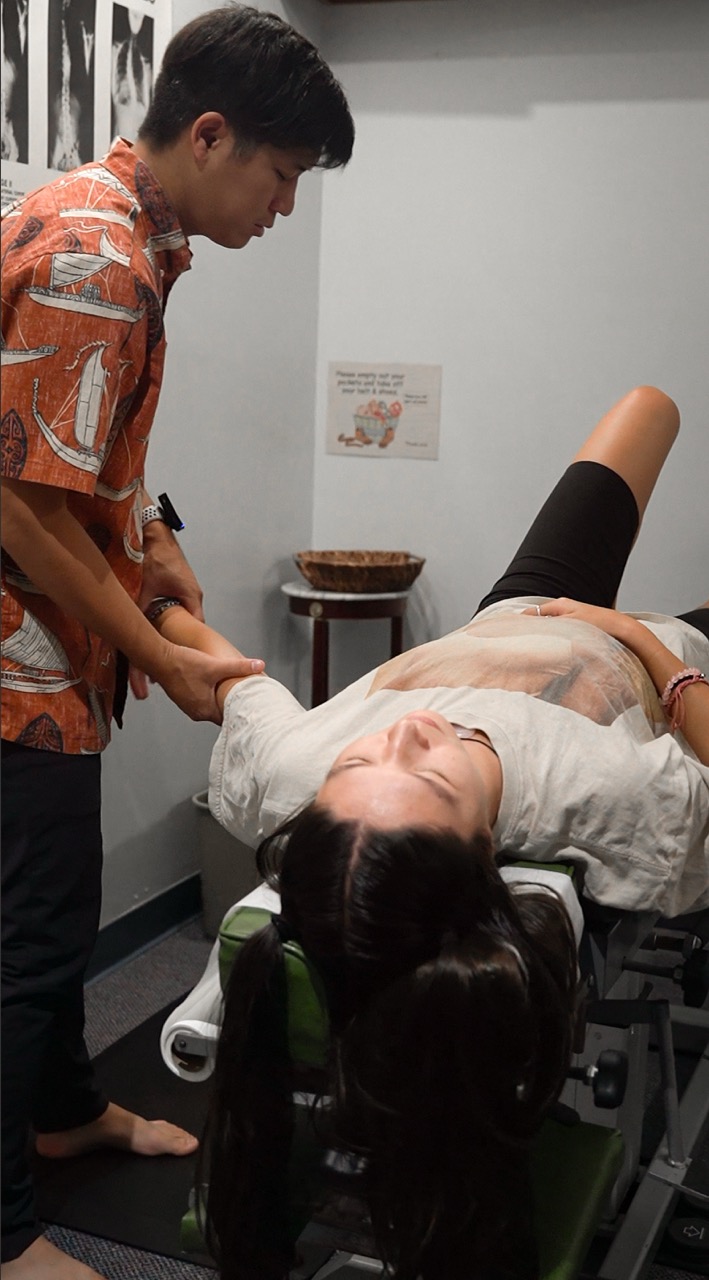
Dr. Wyland Luke and Dr. Bryan Luke start with the history the way the job actually happened. Rate or MOS, years under load, gear worn and for how long, deployment history, prior injuries and how they were treated, and what the current week actually looks like. That history usually predicts the exam findings.
The evaluation covers spinal and hip range of motion, segmental joint restriction, muscle length and strength through the chain, and a neurologic screen when there are arm or leg symptoms. For kids, the exam accounts for growth stage and sport-specific demands.
The clinic's upper cervical focus matters for this population specifically. Years of helmet and load-bearing gear, plus any history of blast exposure or head impact, concentrate stress at the junction between the skull and the top of the spine. Those segments carry a dense supply of position receptors, and restriction there contributes to headaches, balance complaints, and a general sense that the head is not sitting right. Restoring motion and position sense at the top of the neck often resolves symptoms that had been treated as isolated back problems.
Care combines specific, gentle adjusting or mobilization, soft tissue work, and progressive rehabilitation aimed at building capacity rather than just calming symptoms. For anyone still in a physically demanding role, that means training the tissue to tolerate the actual load rather than avoiding it.
Coordinating With Your Existing Care
Chiropractic care sits alongside military medicine, not in place of it. Ke'Ale Chiropractic coordinates with your medical providers when imaging, further workup, or specialty referral is warranted, and refers out when the findings call for it. Anyone with a history of head injury, unexplained neurologic symptoms, or a new severe headache should be evaluated medically first.
Check your specific coverage and referral requirements with your health plan before scheduling. Requirements vary by plan and by beneficiary category, and the front office can help you sort out what applies to your situation.
Schedule Before the Next Transition
If you are getting ready for a PCS, coming back from a deployment, or just tired of a back and neck that never fully quiet down, get a baseline before the next thing lands. Ke'Ale Chiropractic in Honolulu works with service members, spouses, and kids from across the Pearl Harbor community. Book with Dr. Wyland Luke or Dr. Bryan Luke and get a plan built around the load you actually carry.


