.svg)

A Joint You Use Ten Thousand Times A Day
The temporomandibular joint sits just in front of each ear, where the lower jaw meets the skull. You use it every time you speak, chew, swallow, yawn, or clench. It is also unusual: it hinges and it slides, it works as a linked pair so neither side can move independently, and it has a fibrous disc riding between the bones that must track smoothly through the whole range.
When any part of that arrangement stops cooperating, people notice fast. TMJ symptoms interrupt eating and talking, which is difficult to ignore or work around. What surprises many patients is how far the symptoms travel. Jaw dysfunction shows up as ear fullness, temple headache, facial aching, tooth sensitivity with no dental cause, and tightness down the side of the neck.
Ke'Ale Chiropractic in Honolulu approaches jaw problems as a regional issue rather than an isolated one. Dr. Wyland Luke and Dr. Bryan Luke evaluate the jaw, the upper neck, and the muscles that connect them, because in practice those structures rarely fail one at a time.
What Patients Actually Describe
The presentations cluster into recognizable patterns.
- A click or pop on opening, sometimes with a second click on closing, which may or may not hurt
- Aching in the cheek or temple that builds through the day and peaks in the evening
- Waking with a tight jaw, sore teeth, or a dull headache across the forehead
- Difficulty opening wide enough to bite a sandwich or finish a yawn comfortably
- The jaw deviating to one side as it opens rather than tracking straight down
- A grinding or sandy sensation rather than a distinct click
- Ear symptoms including fullness, pressure, or ringing with a normal ear exam
Not every click is a problem. Painless clicking that has been stable for years and does not limit function often needs monitoring rather than treatment. Pain, locking, and progressive restriction are the findings that call for evaluation.
Why Clenching Does So Much Damage
The masseter is one of the strongest muscles in the body relative to its size. It was built for short, powerful bursts of chewing, not for sustained contraction. Clenching and grinding ask it to hold load for hours, often overnight, and the tissue responds the way any overworked muscle does. It becomes tight, tender, and prone to referring pain elsewhere.
The temporalis, a fan shaped muscle spreading across the side of the skull, does the same thing. Trigger points in the temporalis refer pain into the temple, behind the eye, and into the upper teeth. This is why patients sometimes visit a dentist convinced a tooth is failing when the source is muscular.
Stress, Sleep, And The Nighttime Load
Most clenching happens outside conscious awareness. Daytime clenching often accompanies concentration, driving, or screen work, and people catch themselves mid clench with the teeth already together. Teeth should rest apart, lips closed, tongue resting on the roof of the mouth. Nighttime grinding is harder to intercept. Poor sleep, alcohol close to bedtime, and airway restriction all raise the odds.
A dental night guard protects tooth surfaces from wear, which matters. It does not by itself stop the muscle from contracting or resolve joint mechanics. That is why patients with a guard sometimes still wake with a sore jaw and a headache, and it is a reason to look further upstream.
The Posture Connection
Forward head posture changes jaw mechanics directly. When the head drifts in front of the shoulders, the muscles below the jaw are placed under tension, which alters the resting position of the mandible and the path it travels on opening. The bite that felt comfortable at neutral no longer lines up the same way. Anyone spending long hours over a laptop, a phone, or a workbench is running that experiment continuously.
The Cervical Connection Most People Miss
The upper neck and the jaw share neurology. Sensory input from the top three cervical nerve roots converges in the brainstem with input from the trigeminal nerve, which supplies the jaw, teeth, and much of the face. That shared processing means irritation from the neck can be experienced as facial or jaw pain, and jaw dysfunction can register as neck tension.
They also share mechanics. The suboccipital muscles at the base of the skull, the sternocleidomastoid running down the side of the neck, and the muscles beneath the jaw all influence head position. Change one and the others adapt. This is why a patient may get temporary relief from jaw treatment alone and find the symptoms return within weeks. The neck kept pulling the jaw back toward the pattern that caused the problem.
Headache Overlap
Headache is one of the most common companions to TMJ dysfunction, and it is often the symptom that finally brings someone in. The patterns overlap enough to be confusing. Temporalis trigger points produce temple pain. Cervicogenic headache from the upper neck produces pain at the skull base that refers behind the eye. Masseter involvement can create a deep ache in the cheek and ear region. A patient may have two or three of these running at once.
Sorting them out requires examining both regions in the same visit. Palpating the jaw muscles to see whether pressure reproduces the headache, checking cervical range and segmental motion, and observing jaw opening for deviation and range all contribute. The goal is to identify which structure is driving the pain rather than treating whichever one the patient named first.
How Ke'Ale Chiropractic Evaluates And Treats
The exam covers measured jaw opening, the path of the jaw during opening and closing, joint sounds palpated at both temporomandibular joints, and tenderness through the masseter, temporalis, and pterygoid regions. It also covers the cervical spine: range of motion, segmental restriction, upper cervical alignment, suboccipital tone, and postural assessment of head carriage. Sleep habits, stress load, chewing patterns such as gum or ice, and any dental history including recent extensive work all enter the picture.
What Care Involves
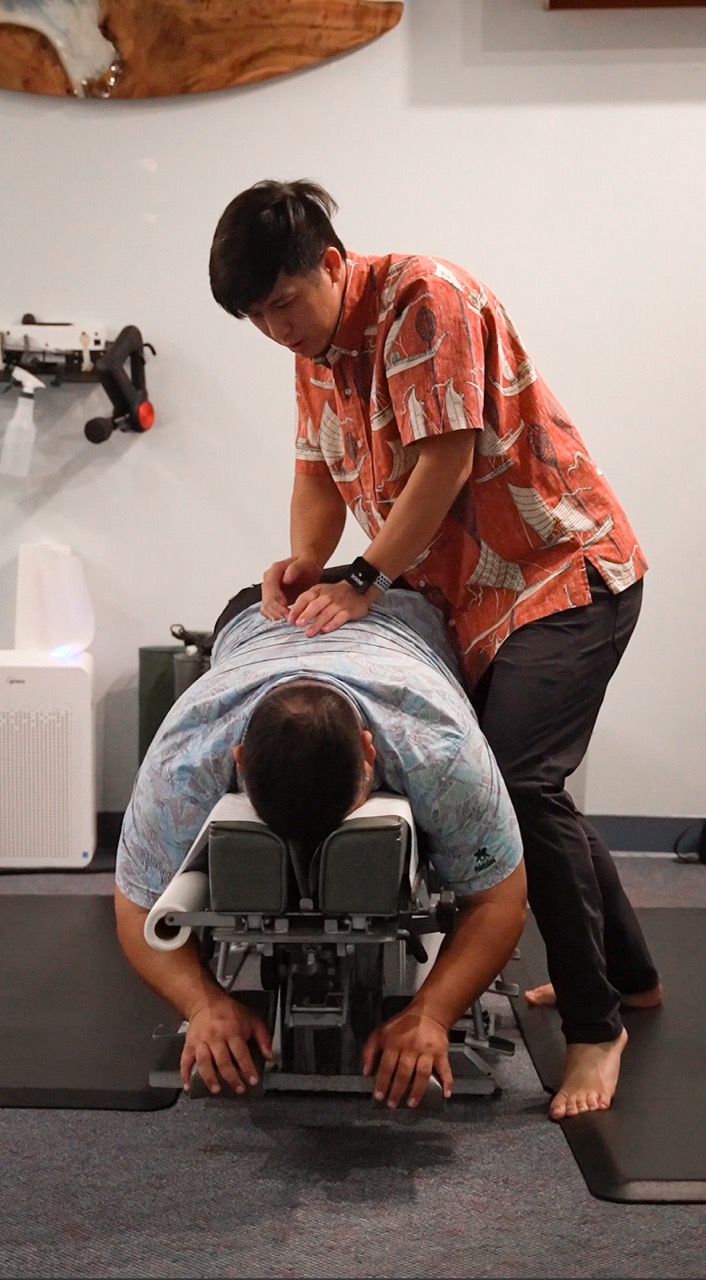
Treatment typically combines several elements. Soft tissue work addresses the masseter, temporalis, and the muscles under the jaw, including intraoral technique when appropriate and with clear consent. Gentle joint mobilization improves how the jaw tracks. Upper cervical correction, the clinic's area of focus, addresses the neck contribution to jaw mechanics and to the shared pain pathways. Home instruction covers resting jaw position, controlled opening exercises to retrain a straight opening path, and habit changes such as eliminating gum, avoiding wide bites, and interrupting daytime clenching.
Progress usually appears first as reduced morning soreness, then as a quieter headache pattern, then as improved opening and less clicking. Muscular components respond faster than joint or disc changes. Long standing dysfunction takes longer than a recent flare.
Working With Your Dentist
Some cases need dental input. Significant bite problems, tooth wear requiring restoration, and night guard fabrication belong with a dentist. Locking that prevents opening beyond a couple of finger widths, a jaw that will not close, or joint changes suspected on imaging may need a specialist. Ke'Ale Chiropractic coordinates rather than competes, and the combination of manual care for the muscles and neck alongside dental management of the bite tends to serve patients better than either alone.
Things You Can Change This Week
- Keep teeth apart at rest, with lips together and tongue on the palate
- Stop chewing gum and skip hard or chewy foods during a flare
- Cut food into smaller pieces so you are not opening wide repeatedly
- Support the jaw with a hand when yawning
- Raise your screen to eye level to reduce forward head posture
- Apply moist heat to the jaw muscles for ten minutes in the evening
- Sleep on your back or side without a hand or fist pressed under the jaw
Get Your Jaw And Neck Assessed In Honolulu
Jaw pain that has lasted more than a few weeks, morning headaches you have started treating as normal, or a click that is turning into restriction all deserve a proper look, and that look should include the neck. Ke'Ale Chiropractic in Honolulu evaluates both regions together with Dr. Wyland Luke and Dr. Bryan Luke. Schedule a visit and get a clear picture of what is driving your symptoms.


